The Tale of Genji, Retold by Empaths

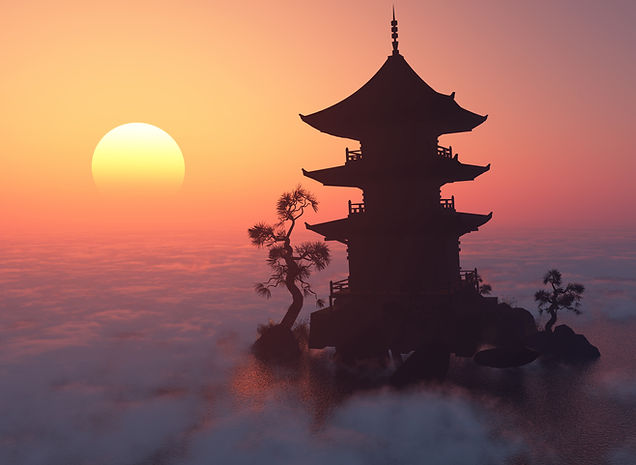
The Tale of Genji, Retold by Empaths
A Letter That Crosses a Thousand Years
Murasaki Shikibu and Her Women Reveal the Empath's "Nuclear Fusion" and Dawn
by Yu Ichinose
I went looking for empaths on this earth.
World-famous singers, manga artists, tech billionaires you might not expect, poets, presidents — I'll refrain from naming names here. But you may already have someone in mind: that person, or this one.
Today, an empath is defined as someone with high emotional intelligence. That high EQ is considered a crucial factor in business success. Many corporate leaders are, in fact, empaths, and people with strong empathy are named again and again as essential to the success of teams and projects within companies. These days, MBTI-style assessments are often used when forming teams. In this way, our understanding — and use — of temperament has advanced with the times.
But what was it like in an earlier age?
The Tale of Genji, which we studied in middle school and high school in Japan, was written in the Heian period, yet it remains beloved even now. Akiko Yosano's modern-language translation is especially well known. In the Taishō era, The Tale of Genji became a landmark celebration of "free love," a bible for women pursuing the life of the "New Woman." Ever since, it has been treated in Japan as the definitive dramatic, sweeping romance of the beautiful Hikaru Genji and the court women around him.
Internationally, too, it has earned extraordinary acclaim as "the world's oldest full-length novel" and "the world's first psychological novel." Its philosophy — mono no aware and a Buddhist sense of impermanence, neither of which has a true Western equivalent — seems to be part of why world literary circles hold it in such high regard.
At the same time, women writers around the world have emphasized that most of the characters — and the author herself — are women, and the novel has become a favorite subject of gender criticism at many universities. Scholars focus on the psychological world of women who, in that era of polygamous "visiting marriage," were at the mercy of powerful men, suffering jealousy and social isolation, with no rights and no standing in court.
I only encountered that kind of critical awareness after I came to live in America. My view of The Tale of Genji changed. But if I'm honest, I remember feeling a sense of unease the very first time I read it, as a teenager in middle and high school. "It scared me" — that was my reaction as a girl back then. Now, much further down the road, having come to understand that I myself am an empath, I want to walk with you today through the Genji I see.
So, imagine this.
Today, you are the author of The Tale of Genji — Murasaki Shikibu.
Let me give you a little background first.
Murasaki Shikibu served as a lady-in-waiting to Fujiwara no Shōshi, the principal consort of Emperor Ichijō. With the full backing of Shōshi's father, Fujiwara no Michinaga, she wrote The Tale of Genji. Her critical mission was to draw Emperor Ichijō toward Shōshi's chambers, purely out of his eagerness to read the story.
Murasaki Shikibu herself was extraordinarily sensitive, prone to absorbing the feelings of those around her. She was acutely attuned to the silent cries and suffering of the women at court, tossed about by noblemen of high rank. Judging from how deeply their inner lives are portrayed, those women, too, seem to have shared her sensitivity — what we would today call HSP or empath temperament.
From here, you — as Murasaki Shikibu — begin to look back and speak of that time.
You, the Murasaki Shikibu living in the present day, carry the vocabulary and perspective of Jungian psychology, along with knowledge of astrophysics and gender studies. From the recognition and viewpoint of being an empath yourself, you attempt to explain your own work.
Prologue
Night has deepened. Through a gap in the blinds of the pitch-dark room, a single ray of moonlight slips in, quietly illuminating the tatami. That was a thousand years ago now.
At the Heian court, I sat utterly alone beside an oil lamp, gripping my brush.
This was a dazzling world where people moved about in resplendent robes and elegant poems flew back and forth. But right alongside that brilliance, I was always exposed to an excess of "atmosphere" and always exhausted by it.
Someone's unconscious sigh. Jealousy hidden behind a smile. Sorrow or anger that never found words. All of it poured into my chest as though it were my own turbulent heart. At court, people were forever hunting for others' flaws, ready to criticize at the smallest provocation. That air of malice and envy would flood in and torment me endlessly. I pretended I "saw nothing, understood nothing."
Why does everyone call me pretentious and standoffish? I am not such a fine person—why do they see me that way? I sank into deep discouragement, blaming myself every single day.
In that high-stress environment of the court, where human desire and jealousy churned constantly, the antennae of my heart and mind were always stretched to their limit. Extremely thin-skinned, living with a constant sense of difficulty, I nevertheless began to weave a story.
The women who appear in The Tale of Genji are Rokujō no Miyasundokoro, Murasaki no Ue, and Ukifune. All of them, because their sensitivity was too sharp, were tossed about by the intentions of others, and burned their own souls to ash. I understand their feelings as though they were my own.
Yes—just as you, called "HSP" or "empath" in the present day, understand them too.
Chapter One: A Soul That Shines Too Brightly and Collapses
Nigredo as a Supernova
I set The Tale of Genji a hundred years before I wrote it, in the earlier days of the Heian imperial court. That was my safety valve. My instinct for self-protection. Within the four-hundred-year span of the Heian period, that setting became a symbol of the ideal, elegant Heian world—a courtly fantasy in its purest form. It was also a way of protecting myself and my characters.
Within the imperial court of my story, Hikaru Genji is presented as a dazzling "sun," celebrated as the very ideal of a Heian nobleman—"the perfect man, incarnate." But behind that brilliant tale swirled the silent screams of women trampled by an absolute violence born of power and noble blood.
Seen through modern eyes, all the more so, much of what unfolds in the story is not elegant "courtship." A man of high rank could do almost anything to a woman and be forgiven for it. Slipping into a woman's chamber under cover of night. Ignoring her refusal to take her body by force—yobai. Violation by sheer force. Yūgao, Onna San no Miya, and Ukifune—all victims of this. Even the ten-year-old Murasaki no Ue was taken by force and raised at his hand to become his "ideal wife." By today's standards, these are sex crimes, abduction, and domination—yet at the time, none of it was ever a crime.
(As a side note: the discarded women's later lives were, in my telling, guaranteed by Genji's support—that was one rule of the nobility at the time. Though I also wrote that by the time of his son Kaoru and grandson Niou no Miya, even that custom had faded, and women were sometimes simply cast aside.)
Either way, women were granted neither the legal right to protect themselves nor even the freedom to refuse—that was the sheer cruelty and unreasonableness of the Heian age.
Writing under the protection of the absolute power of Lord Michinaga, I was never permitted to criticize this unjust social structure head-on. To provoke his anger, even once, would have meant my ruin.
And so, layering a veil upon the elegant veil of a love story between noble men and their beautiful, devoted women, I quietly hid beneath it the truth: women whose bodies and hearts were tossed about, whose souls were destroyed by men's self-serving desire and power.
The Light and Shadow of Rokujō no Miyasundokoro
Consider the cold way Rokujō no Miyasundokoro was cast aside by Hikaru Genji. At first, she was proud to be his older, dignified, intelligent lover—but soon she became a burden to him, her pride trampled, and in the end she suffered a kind of public, emotional death by neglect.
Precisely because her intellect and sensitivity—her empathic temperament—were so acute, she sensed his cold change of heart early on and suffered for it. To protect her pride from being toyed with, she kept suppressing her emotions until the suppressed darkness of her heart—her shadow—began to run wild in the form of a living spirit. Anger, jealousy, and humiliation she never let show became that spirit.
The living spirit was never something she intended. What I wanted to depict was the terror of the unconscious mind under suppression and the sheer scale of that energy. Rokujō no Miyasundokoro is the most tragic symbol of this in The Tale of Genji.
This spirit takes the life of Yūgao and possesses Aoi no Ue again and again, killing her. After Rokujō's own death, the spirit becomes a vengeful ghost and possesses the ailing Murasaki no Ue, tormenting her.
Refined and dignified, Rokujō no Miyasundokoro could never confront Genji directly with her anger or her misery, and so she sealed all of it inside herself. As a result, a "shadow" she could not control herself took the terrifying form of a living spirit and ran wild. The scale of that energy is, in a sense, cosmic.
The Light and Shadow of Murasaki no Ue
Consider what Murasaki no Ue was forced to endure—the descent of Onna San no Miya (a woman of even higher rank who became Genji's principal wife, relegating Murasaki to the status of a favored concubine)—and the agony of being forced to wear a mask of perfection. Even as Genji had affair after affair, she had to keep up the mask of his most beloved woman, all while knowing, in the end, that she remained a shadow figure.
Brought to him from early childhood and raised entirely to his taste, she kept performing the role of his ideal, radiant woman. To meet his expectations, she strove never to show jealousy, to remain thoughtful, beautiful—a "being of light" illuminating everyone around her.
But by continually killing her own heart, Murasaki no Ue eventually fell deeply ill, in both body and mind.
The suffering these women experienced was not mere jealousy or lovesickness. It was the destruction of the spirit that comes from trying to love even after being wounded, only to have one's dignity cruelly stripped away and one's boundaries violently trampled. Theirs was, to begin with, a distorted love between people who were never equals. Was that love even real?
Too sensitive, empathizing even with the pain in the hearts of the very people who hurt them—these pitiable HSP and empath women had no choice but to absorb, entirely into themselves, the selfish expectations of the most powerful men, the mockery of the world, and an oppression with no way out, and simply endure it. As a fellow woman, as an empath, I understood their sorrow, suffering, hatred, and despair as though it were my own pain.
Self-Collapse — When the Limit Is Exceeded
That is self-collapse. When the energy of over-adaptation exceeds its limit, it explodes and collapses. It is what Jungian psychology, in your time, calls the age of nigredo. If you were a star in the cosmos, you would be crushed by your own gravity, collapse, break apart, and explode as a supernova.
One who could no longer bear the unreasonableness of it all and screamed as a living spirit—that was Rokujō no Miyasundokoro. One who killed her own heart while still alive and collapsed into an illness with no clear cause—that was Murasaki no Ue. Their collapse was the greatest protest, the greatest refusal, that women socially powerless in that age could stake their lives on.
You, living in the present, may have—though in a different form—been wounded by an unreasonable violation of your boundaries, by unjust treatment born of someone else's position, your heart shattered by it.
Please know this: the violent breakdown of emotion, the despair you experienced, was never because you were weak or foolish.
It was the inevitable "self-collapse"—your soul rightfully raging against unreasonable outside pressure, wounded, trying to break through an old limit. It was your "supernova," your "nigredo." (Nigredo refers to the state of confronting one's own shadow and experiencing a kind of spiritual despair or collapse.)
This process of collapse, falling into pitch darkness, was the unavoidable process by which you—endlessly plundered—refused to give any more of yourself away and returned to your true self. It closely resembles the death-and-rebirth process of a star in the cosmos: the supernova. It can also be likened to a caterpillar shedding its skin in the chrysalis.
And in the latter half of The Tale of Genji, I depicted Ukifune's escape from this unreasonable oppression and her path toward becoming a nun.
Chapter Two: The Riverbed at Uji, an Event Horizon
A Black Hole as Sacred Shutdown
In an age when a man's hand could so easily overwrite a woman's life, and her own will meant nothing at all, I depicted the extreme of that unreasonableness in the story's final chapters: the tale of Ukifune, who lived at Uji.
Ukifune was a pure empath, someone who resonated with others' feelings to an almost excessive degree. She was torn between two men's egos: Kaoru—who wears a mask of nobility while pursuing her with a quiet, relentless obsession (Genji's nominal son, in truth born of his wife Onna San no Miya's affair)—and Niou no Miya—who forces himself on her with passionate words and seizes her body (Genji's grandson).
For the men, perhaps it was all an elegant game of courtship. But for Ukifune, who had no power of choice whatsoever, it was nothing less than the torment of being torn apart between two enormous gravitational pulls.
Her empathy—her wish to meet both men's expectations—wore her heart down to its very limit, until at last she lost herself entirely.
"It's because I exist that everyone suffers. It would be better if I simply disappeared."
That is how she came to blame herself. Cornered, she chose to throw herself into the Uji River at night.
Under the traditional, male-centered, romantic reading, this might be understood simply as a "failed, sorrowful suicide attempt"—an act of escape. And indeed, that is literally how I wrote it: that she tried to die but was saved. Yet the true intention I entrusted to this story is different.
Ukifune's Plunge into the Uji River as a Staged Social Death
Ukifune's plunge into the river was a staged social death. It was intentional. By leaving her clothes at the riverbank and vanishing, she made the world certain that "Ukifune is dead." Kaoru, Niou no Miya, and even her own family believed she had died, and a funeral was held. This was a life-risking, ultimate act of refusal—a protest to erase, completely, the self that belonged to these men as property. Ukifune, as a person, was wiped entirely from society.
I am glad that this intention of mine has been studied from a gender-studies perspective by contemporary Western scholars of Japanese literature and feminism, including Dr. Doris Bargen. Her research pays particular attention to how the difficulty of women's lives in The Tale of Genji is expressed through "possession" (the living spirit) and "disappearance or seclusion" (the plunge into water).
In her book A Woman's Weapon: Spirit Possession in the Tale of Genji, she analyzes it this way: for women in the Heian period, who had no public voice and nowhere to flee, the "runaway of the spirit" (becoming a living spirit) and "erasing one's own existence" (social death) were the only permitted "weapon of the weak" against those in power.
She also argues that Rokujō no Miyasundokoro's spirit possessing other women was not, as a simplistic male-centered romantic reading would suggest, born of jealousy over Genji. Rokujō—likely an HSP or empath herself—deeply empathized with the fact that the other women shared the same suffering and sorrow she did; she was not one to be driven simply mad by jealousy. Bargen even suggests that the possessed women themselves made use of the possession, performing it, to reveal the power of their own shadow to Genji, and by extension to the political power structure of society itself.
That vast, almost dreadful energy of their inner shadow crushed them, surfaced as a living spirit, and staged their own deaths. They achieved social death. The shape of that collapsing energy may resemble the death of a star in the cosmos.
Just as a star that undergoes gravitational collapse transforms into a black hole that no light from around it can ever reach, Ukifune fell into the pitch darkness of the Uji riverbed, escaping into the interior of an "event horizon" that no one else's selfish love, unreasonable expectation, or social judgment could ever reach.
And the path chosen by the woman miraculously pulled from the water—it was to become a nun. Revived, Ukifune said nothing when asked about her past and cut off her own hair.
For a woman of that time—a woman with no right to protect herself—cutting one's hair and donning black robes as a nun was never merely a religious practice, nor simply a wish to pursue the Buddhist path. It was the only sacred means of self-defense (of shutdown) permitted to her: a permanent departure from the position of a woman used as a political tool by her father for marriage, living in fear of her husband's affairs and whims—a way to refuse, forever, to be the heroine in men's stories, to be treated as a sexual object or remarried off.
Ukifune died and was reborn as a single human being.
From the standpoint of contemporary gender psychology and sociology, this entire sequence in the "Ten Quires of Uji"—Ukifune's apparent drowning in the Uji River and her subsequent tonsure—seems to be read as a staged fake of "social death," carried out by her own will: an ultimate escape (an establishment of boundaries) from a world ruled by men.
To the HSP and empath readers of today, from me—one who has felt and resonated so deeply with the suffering of so many women in The Tale of Genji:
When you, an empath living in the present, are struck by the unreasonableness of the world or the violence in human relationships, and you throw everything aside, shutting yourself in your room—
When you delete LINE, cut off all contact, and shut yourself behind a hard shell, wanting to see no one—
The people around you may call it "escape" or "withdrawal." But please remember this.
That firm shutdown is the "sacred black hole (a place of rest)," the "establishment of boundaries," chosen by a you who has been utterly eroded by others, to protect the dignity of your own soul.
Only once you have completely cut off the outside noise and spent time enclosed in true darkness, you can heal your wounded soul and become a "chrysalis" that nurtures the next form of life.
Just as Ukifune shut out the outside world at the bottom of the Uji River—that quiet darkness you needed, too—is a sacred refuge, indispensable to reclaiming your true self.
Having triggered her own supernova and become a nun, Ukifune cast off her ties to noble society and family, achieving a complete departure from the marriage market—a death as a "woman." She "established her boundaries." And in the next phase, having passed through this shutdown from unreason, she awakens and, through the inner heat of her own self-love, ignites an explosive "nuclear fusion" and is reborn. Let us now depict that climactic moment of rebirth.
Chapter Three: The Moment She Refused the Letter
A Fusion Where Two Hearts Melt Into One
Having hidden herself within the sacred black hole of the Uji riverbed and cut her hair to sever the outside noise completely, Ukifune one day receives a letter from Kaoru—the very man who once cornered and tried to control her.
The old Ukifune would have watched his every mood, blamed herself for failing to meet his expectations, and written a reply with a trembling hand.
But the woman who had passed through her ordainment chose something else: a cold, total refusal—she did not even open the letter and simply sent the messenger back as he had come. Complete disregard.
"I am no longer the pitiable, fragile Ukifune you long for."
She no longer feared the powerful Kaoru and no longer blamed herself for the possibility of having hurt him. The boundary protecting herself had already been firmly established.
When I wrote this single line, my brush trembled with joy. Because this was the moment a woman who had lived only as a "shadow" to satisfy others' desires stood, for the first time in her life, on her own two feet and reclaimed sovereignty over her own life.
What was happening within her in the moment she refused that letter?
Until then, she had always believed that loving another, no matter what happened, no matter the cost, was the light that would earn her love, approval, and being chosen—and she had buried her true feelings of murky anger and the wish to refuse deep in her chest, as though they were a sin. The heart that felt it must love and be loved always faced outward; the shadow-heart that wished to refuse was hidden away within—her mind split in two, forever swayed by other people's axis of judgment.
But having become a nun and shut out the world at the bottom of that pitch-black darkness, she finally realizes:
"It was not only others who wounded me. It was I myself who always put others' moods first and left myself behind."
"I loved others, but I never once looked after myself. I never once loved myself first."
In the name of love, her most precious womanhood had been exploited and wounded; she had lived without even the right to choose. To protect her own devastated heart, she had had no choice but to love the very person exploiting her. That was the only way she could find safety. Who could blame her for that?
And for the first time, she came to feel tenderness toward that self.
"I'm sorry I only ever looked outward until now. From now on, I will be on your side."
"I will protect myself."
In the darkness, when she wrapped her own arms around the abandoned "shadow self" — the anger, the resentment, the self-sacrifice, the coldness and terrible strength and hatred she was never allowed to express — and held it close, under that inescapable, unbearable pressure and heat, a "nuclear fusion" of rebirth ignited within Ukifune.
The rebirth of the soul resembles the mechanism by which a star is born in the cosmos.
In the heart of Ukifune, who had refused Kaoru's letter, there now dwelled a "true "sun"—one that no longer needed the external fuel of another's love, one that generated its own light and heat. The empathy, resonance, and love she had once poured entirely outward, she now burned, at full intensity, for herself. No longer would any of it leak wastefully outward. She would no longer open the door to anyone who might hurt her. It was the moment a firm "self-love" and a firm boundary were established.
You, the empath living today, may also feel a sharp pang of guilt when you flatly refuse someone's unreasonable demand, someone trying to control you.
But please, don't be afraid. The very moment you were able to say "no" is proof that you stepped down from a supporting role in someone else's story and triggered a "nuclear fusion" within yourself.
When you stop fearing the betrayal of others' expectations and hold every one of your own inner shadows close with love—a sun is born within you that shines on its own, one that no one can ever threaten again.
(Here I have woven into Murasaki Shikibu's perspective the fascinating concept proposed by George Kavassilas—that human beings are a fractal of the cosmos—along with a deeper view of the correspondence between human spiritual transformation and celestial phenomena, in depicting the transformation of these women's souls.)
Chapter Four: I Become the True Sun That Lights Myself
From a Transformed Murasaki Shikibu
When I finished writing Ukifune's refusal of that letter, I quietly set down my brush and let out a long breath. Ukifune had saved herself. And the process of saving the women of my story was, in truth, also a journey to save myself.
I, too, was extremely sensitive, and there were many times I suffered from an excess of empathy for others, just as you do. That sensitivity is a wonderful ability that has sustained my work as a writer—but there was a time, at court, when I was overwhelmed by the gazes, the jealousy, and the emotional waves of those around me. I was always protecting myself from excessive stimulation. Fearing the mockery of "she's putting on airs," "acting superior because she knows kanji," I wore the mask of a fool who couldn't even write the simplest character and closed my heart. I lived hiding my own effort, my talent, my intellect.
There were also nights when I carried a complicated jealousy and irritation—a shadow—to my contemporary, the writer Sei Shōnagon, and blamed myself for feeling it. Unlike me, she was the type who could express her own intellect and emotions openly. The energy she gave off was sometimes so dazzling it overwhelmed me. Perhaps I am simply too sensitive. I criticized her fiercely and then blamed myself even more fiercely for doing so.
And yet, through the experience of weaving this story, I came to confront my own darkness directly. When I stopped denying the murky emotions sleeping within me, my vulnerable true face, and the quiet protest against the world that I wove through my "tale"—when I embraced all of it as "this, too, is who I am" and released it lovingly into the story—the chains that had bound my soul vanished without a trace.
The way of living as a "moon," shining only by borrowing the fickle light of others' judgment—that is over now. What remains for us is the path of living as a "true sun" (Rubedo): melting together all our inner shadows and shining by our own inner heat. It was with that thought that I wrote the lives of the women in The Tale of Genji.
A thousand years ago, through The Tale of Genji, I depicted women's spiritual liberation—the integration of light and shadow.
In your era, the concept of "individuation" from Jungian psychology is now widely recognized.
And after passing through the age of Hermann Hesse, when strength of feeling and an honest look inward were regarded as a kind of madness and caused such suffering, the importance of EQ is now recognized, and HSP and empathic ability have become key components of it. Through scientific research into the brain, what was once dismissed as a vague matter of temperament—their heightened sensitivity and empathy—has come to be valued as a genuine capability.
As brain science, psychology, and quantum physics continue to advance, the mysteries of the heart and mind will surely be unraveled further still.
If I had been born in your time, what kind of story would I write about HSPs and empaths?
I imagine I would probably be writing about them enjoying their lives with this new tool called AI.
I am glad that, even a thousand years later, you still cherish The Tale of Genji enough to read it.
Thank you.
Murasaki Shikibu, 2026


Comments